
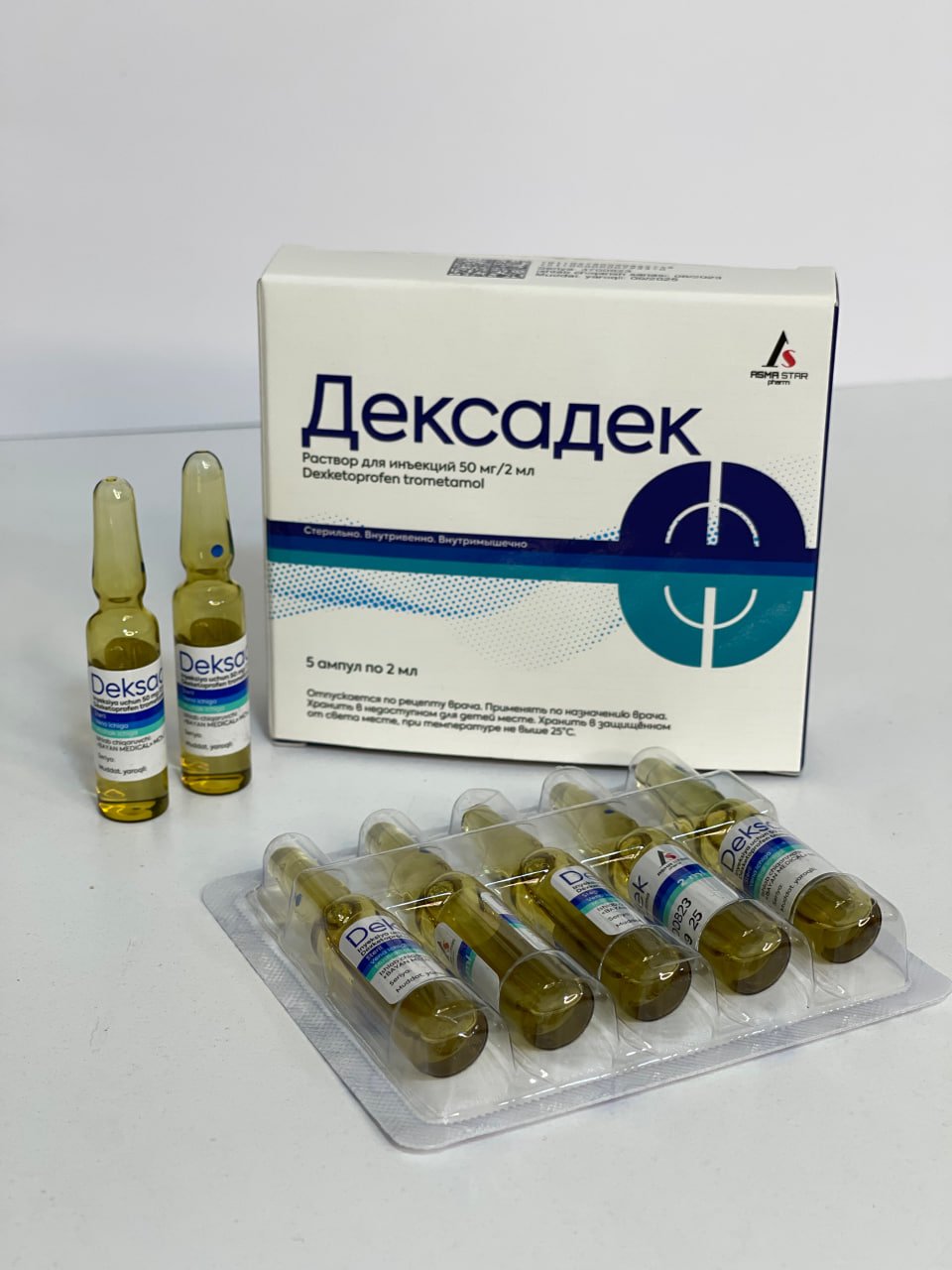
Dosage form:
Composition:
Indications for use: Relief of pain syndrome of various origins (including postoperative pain, pain from bone metastases, post-traumatic pain, pain in renal colic, algodysmenorrhea, sciatica, radiculitis, neuralgia, toothache): symptomatic treatment of acute and chronic inflammatory, inflammatory-degenerative and metabolic diseases of the musculoskeletal system (including rheumatoid arthritis, spondyloarthritis, arthrosis, osteochondrosis).
Areas of use:
• Neuralgia
• Radiculitis
• Sciatica
• Polyarthritis
• Osteoarthritis
• Osteochondrosis
• Reactive arthritis
Postoperative pain, Pain from bone metastases, Post-traumatic pain, Renal colic, Algodysmenorrhea, Toothache, Biliary colic, Ankylosing spondylitis.
Method of administration and dosage: Dexadek is used for intramuscular and intravenous administration.
Adults: The recommended dose of dexketoprofen is 50 mg every 8-12 hours. If necessary, the dose can be repeated every 8 hours. The total daily dose of dexketoprofen should not exceed 150 mg. Dexat is contraindicated in patients with severe hepatic impairment. In patients with moderate renal impairment (creatinine clearance 50-80 ml/min), the total dose of dexketoprofen should not exceed 50 mg per day. The medicine should not be prescribed to patients with severe renal impairment (creatinine clearance < 50 mg/ml). Dexadek can be mixed in small volumes (e.g. in a syringe) with injectable solutions of heparin, lidocaine, morphine and theophylline. The contents of one ampoule (2 ml) are injected slowly and deeply into the muscle. The contents of one ampoule ( ml) are dissolved in 30-100 ml of saline, glucose solution or Ringer’s solution and administered as a slow intravenous infusion lasting 10-30 minutes. Intravenous injection (bolus administration): if necessary, the contents of one ampoule (2 ml) are injected intravenously over at least 15 seconds.
Side effects: Rare — anemia; uncommon — headache, dizziness, insomnia, drowsiness; Sensory organs: uncommon — blurred vision; arterial hypotension, feeling of heat, skin hyperemia; rare — extrasystole, tachycardia, arterial hypertension, peripheral edema, superficial thrombophlebitis, bradypnea, nausea, vomiting; uncommon — abdominal pain, dyspepsia, diarrhea, constipation, dry mouth; rare — erosive and ulcerative lesions of the gastrointestinal tract, including bleeding and perforation, increased activity of liver enzymes, dermatitis, rash, sweating; rare — acne, urticaria; rare — hyperglycemia, hypoglycemia, hypertriglyceridemia, ketonuria, proteinuria. Contraindications: hypersensitivity to dexketoprofen or other NSAIDs or to any of the excipients of the medicine; history of asthma attacks, bronchospasm, acute rhinitis, urticaria or angioedema caused by substances with a similar mechanism of action (acetylsalicylic acid and other NSAIDs); active peptic ulcer of the stomach and duodenum or recurrent episodes of peptic ulcer (two or more episodes); gastrointestinal bleeding (including bleeding associated with previous NSAID use), other active bleeding; Crohn’s disease, nonspecific ulcerative colitis, third trimester of pregnancy and lactation; childhood.
Special instructions: The use of Dexadek with NSAIDs, including selective cyclooxygenase-2 inhibitors, should be avoided. Before starting treatment with dexketoprofen trometamol, and in patients with a history of esophagitis, gastritis and/or peptic ulcer, make sure that these diseases are in remission. Dexadek is contraindicated in the third trimester of pregnancy and during lactation. In the first and second trimesters, Dexadek may be used only when strictly necessary, on a doctor’s recommendation, at the minimum doses and for the shortest possible period. Dexketoprofen trometamol is removed from the body by dialysis. Prescription only.



© 2026 ASMA STAR PHARM. All rights reserved. This information does not replace a doctor’s consultation. | Website by York.uz